
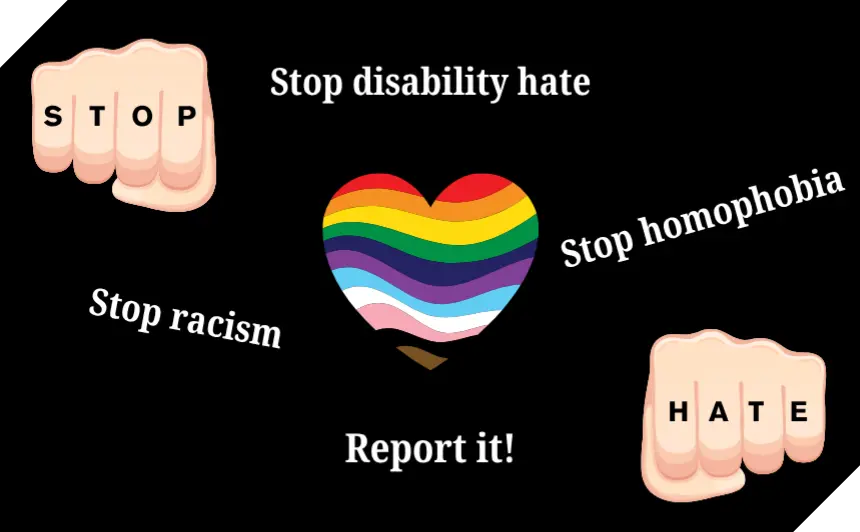
About hate crime
Identifying hate crime
Hate crime is defined as a crime committed against someone because of their disability, gender identity, race, religion or belief or sexual orientation.
A hate crime is any behaviour that someone thinks was caused by hostility, prejudice or hatred of their:
- disability, including physical impairments, mental health problems, learning disabilities, hearing and visual impairments
- gender identity
- race, skin colour, nationality, ethnicity or heritage
- religion, faith or belief, including people without a religious belief
- sexual orientation
- lifestyle and dress (for example, an alternative sub-culture).
Anyone can experience hate crime if they are targeted because of who they are, their friends or family or even who the perpetrator thinks they are.
Hate crimes can include:
- name calling or verbal abuse
- graffiti or abusive writing
- damage to property
- threats or intimidation
- bullying or harassment
- physical attacks or violence, including sexual violence, arson and murder.
If you're experiencing hate crime
Tell the police
Hate crime is a criminal offence and should be reported to the police immediately:
- by calling 999 in an emergency (if there's immediate threat to life or the crime is ongoing), or
- by calling 101, or
- online at www.report-it.org.uk/your_police_force.
Tell us
Please also let us know about the incident.
Get in touch and ask to speak to your housing officer or a member of the housing management team on 0300 1234 009 or email enquiries@midlandsrural.org.uk
Help and support
You can find help and support from Stop Hate UK:
- Stop Hate UK website
- 24-hour helpline: 0800 138 1625